This website is using cookies
The company Centrum pohybové medicíny Pavla Koláře, a.s informs you that these pages use cookies. You can find more detailed information about cookies and the processing of personal data in the Declaration on the protection of privacy and the use of so-called cookies . We hereby ask for your consent to the use of these cookies.
Bone strength is not something we normally feel every day. That is why changes in bone mass can go unnoticed for a long time. Osteoporosis or an increased risk of fractures often only become apparent when complications arise. Densitometry is an examination that helps to detect these changes early.
At the Pavel Kolář Center for Movement Medicine in Prague, we perform densitometric examinations aimed at diagnosing bone density and early detection of osteoporosis and other conditions associated with bone loss. The examination is quick, gentle, and an important part of preventive and follow-up care for the musculoskeletal system.
We are currently reminding you of the available densitometry capacities for new clients and for patients for whom the examination can suitably complement the care of a doctor, physiotherapist or nutritional specialist. The advantage of CPMPK is that the examination result does not have to remain isolated information. If necessary, it can be followed up by further professional care within one center.
What densitometry will show
Densitometry measures the density of bone tissue and the amount of minerals in bones. This can help detect reduced bone quality before more serious complications, such as fractures, develop. The examination is used to diagnose osteoporosis, monitor the development of bone density, and monitor the effectiveness of treatment.
Two types of examinations are available at CPMPK:
Densitometric examination
It focuses on bone density in selected areas of the body, most commonly the lumbar spine, hip, or forearm. It helps assess bone strength, risk of osteoporosis, and likelihood of future fractures.
Whole body densitometry
It scans the entire body at once. In addition to bone density, it also provides an overview of the amount of muscle mass, fat, its distribution and overall body composition. This can be beneficial not only in prevention, but also in sports, nutritional or weight loss programs.
Who is the examination suitable for?
Densitometry is particularly suitable for suspected osteoporosis, long-term monitoring of bone density, after repeated or unusually occurring fractures, during treatment that may affect the quality of bone mass, or as a preventive check-up in older age.
Whole-body densitometry can also be beneficial for clients who want to objectively monitor body composition during sports, weight change, or nutritional care. The result provides a more accurate view than regular weighing alone, as it distinguishes the amount of muscle and fat mass and its distribution.
An examination may be appropriate to consider for clients, for example:
- with a risk of osteoporosis,
- after fractures or when there is suspicion of reduced bone strength,
- in postmenopausal women,
- for seniors,
- during long-term treatment affecting bone metabolism,
- during weight reduction,
- during sports training,
- in connection with nutritional, rehabilitation or rheumatological care.
The advantage of CPMPK: examination with follow-up care
The measurement itself is important. But it is even more important to correctly understand its result and set the next steps. This is where CPMPK has a significant advantage thanks to its interdisciplinary connection.
Within rheumatology, he focuses on, among other things, inflammatory and degenerative joint diseases, long-term musculoskeletal pain, osteological examinations, and the diagnosis and treatment of osteoporosis.
Internal medicine provides comprehensive internal care, diagnostics of metabolic and internal diseases, prevention of lifestyle diseases, and links to other specialties. Internal care can be especially important when it is necessary to assess broader health contexts, such as metabolism, hormonal influences, nutrition, or overall health.
Rehabilitation medicine focuses on the treatment of musculoskeletal disorders and diseases, comprehensive diagnostics, targeted treatment, and teamwork with other specialists. In practice, densitometry results can help to better set an exercise regimen, rehabilitation, or other preventive measures.
Densitometry as part of comprehensive care
Densitometry at CPMPK is not just a stand-alone instrumental examination. It can be part of broader care for health, prevention, musculoskeletal system, nutrition, and long-term quality of life.
The results of the examination can serve as a basis for further recommendations from a doctor, physiotherapist or nutritionist. This is especially important for clients who want not only to know the numbers, but also to understand what they mean for their health and how to work with them further.
Densitometry can also be followed by annual care programs, which are intended for clients who are looking for comprehensive care for the musculoskeletal system, dealing with pain, post-injury conditions, or who want to actively engage in prevention. The programs allow for the connection of available specializations and diagnostic methods according to the individual needs of the client.
How the examination is carried out
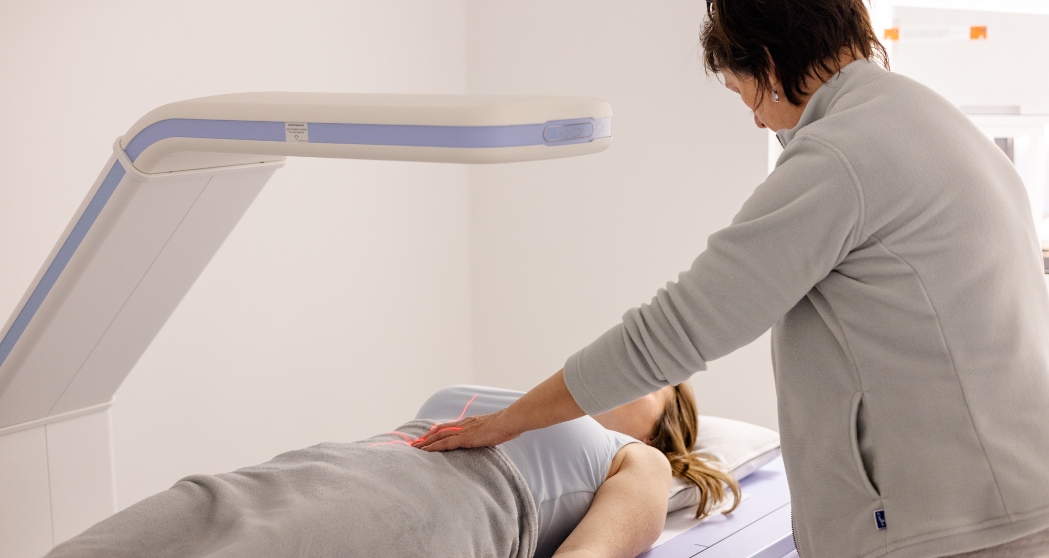
Densitometry is painless and time-saving. The measurement itself takes approximately 30 minutes. The patient lies on his back during the examination and remains still for several minutes. The device uses a very low dose of X-ray radiation to measure bone density; in the case of whole-body densitometry, it also evaluates body composition.
The examination does not require special preparation and after its completion, the client can return to normal activities. CPMPK uses a modern Hologic bone densitometer, which allows for accurate measurement of bone density and whole-body densitometry.
Prevention makes sense before complications arise
Bone health is an important part of overall fitness and physical independence. Early examination can help reveal risks that would otherwise remain hidden for a long time. This allows preventive or therapeutic measures to be set in time, to monitor development over time, and to better protect quality of life.
Densitometry is suitable for clients who want clearer information about the condition of their bones, as well as for those who need to objectively monitor changes in body composition. At CPMPK, the examination is followed by comprehensive care — from rheumatology and internal medicine to rehabilitation and individual care programs.
Because prevention is not just about one outcome. It's about understanding the context and properly setting up care.

222 204 304
Mon - Thurs 7:00 a.m.–7:00 p.m.
Fri 7:00 a.m.–4:30 p.m.
Do you want us to contact you?
Please do not hesitate to contact us by phone to solve any acute problems. Submitting a request via the form does not guarantee an automatic order. We will get back to you with confirmation within one working day.
Need some advice?
222 204 304
Mon - Thurs 7:00 a.m.–7:00 p.m.
Fri 7:00 a.m.–4:30 p.m.